
Wuthering Waves Launch Troubles and Kuro Games’ Ambitious Recovery Plan
Wuthering Waves' rocky launch, marred by Echo grind and Verdant Summit issues, prompted Kuro Games' transparent recovery with compensation.
The road to becoming a beloved live-service title is rarely smooth, and Wuthering Waves proved no exception. Even as millions of players dove into its vibrant post-apocalyptic world, a torrent of technical hiccups and design frustrations threatened to overshadow the experience. From punishing Echo progression to missing quality-of-life features, the launch felt more like an early access beta than the polished debut Kuro Games had promised. Yet, instead of retreating into silence, the developer stepped forward with remarkable transparency—a move that reshaped the game’s trajectory over the following years.
Why would a studio, fresh off the success of Punishing: Gray Raven, stumble so visibly with its first self-published global title? The answer lies partly in the sheer ambition behind Wuthering Waves. Building a seamless open world, fluid combat, and a gacha ecosystem simultaneously stretched the team’s resources to their limits. Within days of release, feedback flooded official channels: Echo leveling felt excessively grindy, the absence of a Waveplates storage system left stamina management frustrating, and localization errors—such as the infamous Verdant Summit mistranslation—eroded trust among non-CN players. Kuro Games acknowledged these failures not through a generic corporate statement, but with a detailed roadmap and heartfelt apology.
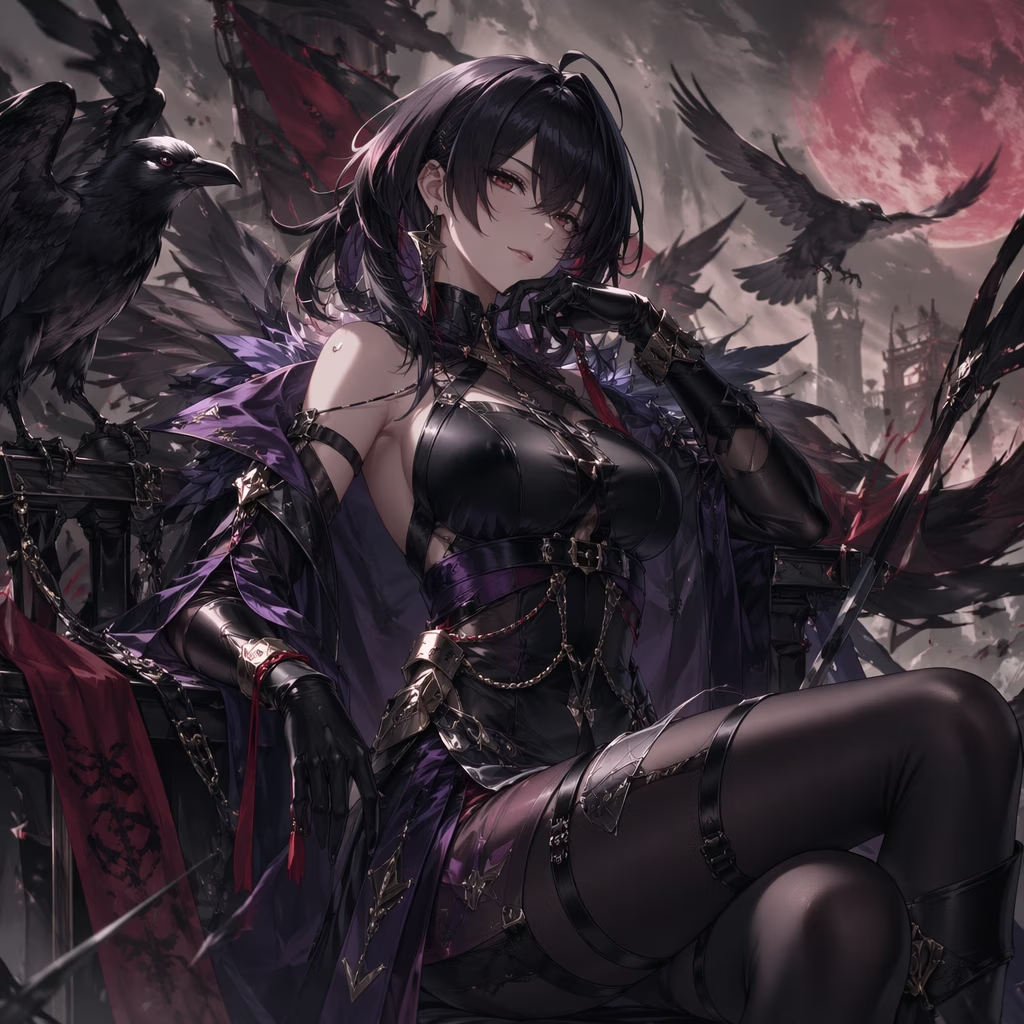
The centerpiece of the recovery effort was a sweeping compensation package. All players received 20 Crystal Solvents—equivalent to 1,200 Waveplates—on June 3, 2024, directly addressing the “poor experience with the Echo system.” A limited-time event doubled Echo material yields, softening the grind until permanent changes arrived in Version 1.1. Those adjustments slashed Shell Credit costs for Echo development and removed the repetitive Tacet Field reward cutscene, a small but meaningful quality-of-life win. Equally significant, Kuro Games committed to building the long-requested Waveplates storage system, finally giving players the flexibility to bank excess stamina for later sessions.
How can a single mistranslation cause such a stir? For Rovers wielding the 5-star weapon Verdant Summit, an incorrect description led to unintended character builds and wasted resources. Recognizing the gravity of text-based errors in a game where every stat point matters, the team distributed five Forging Tides to affected accounts, plus one million Shell Credits to those who had lost currency due to the mishandled Echo recycling bug. The latter issue was particularly sensitive—Kuro had silently reclaimed excess Shell Credits from players who benefited from a reward miscalculation, only to apologize later for the “hasty way we handled this issue.” This candid admission, while painful, demonstrated a willingness to learn from mistakes rather than bury them.
Beyond compensation, battle system refinements restored the fluid combat that trailers had advertised. The auto-camera correction feature, which many found disorienting, was turned off by default. Boss encounters received anti-disengagement tweaks, preventing enemies from resetting mid-fight and ruining the flow of combat. These changes, though technical, reaffirmed Kuro’s commitment to the game’s core appeal. Meanwhile, a revamped event structure took shape: the Wuthering Exploration limited-time challenge offered 800 Astrides, Morphable Elite Class Echoes, Premium Tuners, and Sealed Tubes, rewarding engagement far more generously than launch-week activities.
Looking back from 2026, the apology and compensation wave of June 2024 stands as a turning point. Wuthering Waves didn’t merely survive its rocky launch; it evolved into a benchmark for how a developer can rebuild goodwill through tangible action. The Waveplates storage system, initially a distant promise, became a staple feature within months. Echo progression grew less punishing with each patch, and the localization pipeline received a complete overhaul to prevent future Verdant Summit fiascoes. Kuro Games’ closing words at the time—“We understand that continuously releasing better versions and content is our goal and mission”—now read less as damage control and more as a lifelong ethos.
Still, one might ask: did the compensation truly repair the damage, or did players simply move on to the next gacha sensation? For the devoted Rovers who stuck with the journey, the answer is unequivocal. The shower of free currency and quality-of-life upgrades provided immediate relief, but it was the sustained cadence of improvements that won hearts. Today, Wuthering Waves stands shoulder-to-shoulder with genre titans, a testament to the fact that even the most troubled launches can blossom into enduring success—provided the passion behind the project is genuine and the ears remain open.
As the gaming industry evolves, staying informed about the latest updates and offers becomes essential for players looking to maximize their experiences. For dedicated Rovers and new adventurers alike, keeping track of in-game purchases and special deals can be a daunting task. The ever-changing landscape of Wuthering Waves and similar games necessitates tools that can help players make informed decisions without missing out on valuable content.
This is where this price tracking tool comes into play. By providing real-time updates and alerts on game-related deals and promotions, it ensures that players can focus more on their gameplay and less on the constant search for the best offers. Whether it's hunting for discounted packs or staying updated on exclusive event rewards, DealNest serves as a reliable companion for gamers seeking to enhance their adventures without breaking the bank.
Comments